
26th January 2016 (Tuesday)
8:30am - 11:30am
Dewan Persidangan Universiti (DPU), Universiti Sains Malaysia (Main Campus)
REGISTER NOW
FREE ADMISSION
Topics
Observatories and Data Analytics for Web Science
by Professor Dame Wendy Hall
Over the last 25 years the Web has evolved into a critical global infrastructure. Since its emergence in the 1990s, it has exploded into hundreds of billions of pages that touch almost all aspects of modern life. Little appreciated, however, is the fact that the Web is more than the sum of its pages and it is more than its technical protocols. Vast emergent properties have arisen that are transforming society. Web Science is the study of the Web as a socio-technical system. As the Web becomes increasingly significant in all our lives, studying it from an interdisciplinary perspective becomes even more important.
Keeping the lights on: Addressing the challenges facing electrical energy networks
by Professor Paul L. Lewin
The changes faced by existing traditional electrical power transmission and distribution networks over the next 30 years or more are immense. Technological developments include ‘Smart’ grid technology, HVDC interconnectors and bootstraps as well as replacement of conventional generation with significant levels of renewable generation. The impact of these changes on existing (and often aged) high voltage plant will be significant and in the UK, potential future areas of research have been identified through a road-mapping exercise. A key area is that of condition monitoring (CM) of high voltage plant. CM strategies need to develop so that they are ‘real-time’ diagnostic and prognostic in nature. This represents a real challenge for the electrical engineering research community as well as the transmission and distribution companies.
Future trends in Nanotechnology
by Dr Martin D.B. Charlton
With the fast evolution of computers, hand held devices and communications systems which underpin the internet, and the newly emerging field of ‘internet of things’, technology required to fuel the development is shifting from conventional CMOS based microelectronic devices to nano-scale hybrid devices which combine electronics, optics, and a multitude of emerging sensor technologies. This talk will give an overview of technologies under development within the nano-electronics group, give an overview of how we collaborate with industry, and finally an outline of our Nanoelectronics MSc programmes.
Speakers
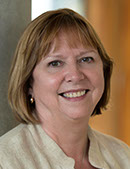
Professor Dame Wendy Hall
Wendy Hall, DBE, FRS, FREng is Professor of Computer Science at the University of Southampton, UK, and was Dean of the Faculty of Physical Science and Engineering from 2010 to 2014. She was Head of the School of Electronics and Computer Science (ECS) from 2002 to 2007. One of the first computer scientists to undertake serious research in multimedia and hypermedia, she has been at its forefront ever since. The influence of her work has been significant in many areas including digital libraries, the development of the Semantic Web, and the emerging research discipline of Web Science. She is now Executive Director of the Web Science Institute at Southampton. She was President of the ACM from 2008-2010, a member of the UK Prime Minister’s Council for Science and Technology from 2004-2010 and a founding member of the Scientific Council of the European Research Council. She is currently a member of the Global Commission on Internet Governance and the World Economic Forum’s Global Council on AI and Robotics. She holds many fellowships including Fellow of the Royal Society, Fellow of the Royal Academy of Engineering and Fellow of the ACM.
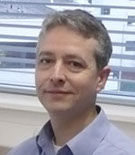
Dr Martin D.B. Charlton
Dr Martin D.B. Charlton is ‘Reader’ (Associate Professor) in photonics and nanofabrication at the School of Electronics and Computer Science at the University of Southampton and held a ‘Royal Society Research Fellowship’ for a record breaking 10 years (2001-2011). Martin was awarded the “Rank thesis prize” for his PhD on Photonic Crystals in 1999 and founded Mesophotonics Ltd (UK startup company) in 2001, to commercialise technology generated during his PhD. Products included: KlariteTM SERS bio-sensing platform, SE1000 RAMAN instrument, Photonic Crystal enhanced LEDs and solar cells. The company was sold in 2008 as two separate businesses and continues as Renishaw Diagnostics (UK) and Luxtaltek / Unilite Corp (Taiwan).
Martins key expertise is in nano-photonic device design and nano-fabrication. Martin leads electron-beam lithography, PVD and Ultra-Fast Spectroscopy facilities at Southampton. His current research interests include solid state Laser devices, Bio-sensor platforms, and high LEDs and solar cells. Martin holds 33 granted and 7 pending patents, delivered 21 invited or plenary talks at international conferences and seminars and has over 110 journal and conference publications.

Professor Paul L. Lewin
Paul L. Lewin was born in Ilford, Essex in 1964. He received the BSc (Hons) and PhD degrees in electrical engineering from the University of Southampton, UK in 1986 and 1994, respectively. He joined the academic staff of the University in 1989 and is Professor of Electrical Power Engineering in the School of Electronics and Computer Science, where he is also head of the Tony Davies High Voltage Laboratory. His research interests are within the generic areas of applied signal processing and control. Within high voltage engineering this includes condition monitoring of HV cables and plant, surface charge measurement, HV insulation/dielectric materials and applied signal processing. In the area of automation he is particularly interested in the practical application of repetitive control and iterative learning control algorithms. Since 1996 he has received funding and grants in excess of £30M, supervised more than 40 graduate students to successful completion of their doctoral theses and published over 470 refereed conference and journal papers in these research areas. He is a Chartered Engineer, a Fellow of the IET and IEEE and was the general chair of IEEE International Conference on Solid Dielectrics 2007 and the IEEE Electrical Insulation Conference 2015. He is the 2016 President of the IEEE Dielectrics and Electrical Insulation Society as well as an Associate Editor of the IEEE Transactions on Dielectrics and Electrical Insulation.
In terms of the education agenda; in the early 1990s he was a member of the working group that established the BEng/MEng electromechanical engineering degree at Southampton. In more recent years he has been personally responsible for the initial development of an MSc in Energy and Sustainability with Electrical Power Engineering (2009) and BEng/MEng in Electronics and Electrical Engineering (2011). He was the External Examiner for the University of Leicester’s BEng/MEng EEE programme (2012-2015), having previously been the External Examiner for Coventry University’s MScs in control and signal processing. In 2011 he received a grant from UK HE-STEM of £150,000 to develop e-learning resources at Masters level for use by engineers in the power industry.
Location Map
Agenda
8:30am - 9:00am
Registration & Networking
|
9:00am - 9:10am
Introduction to USMC
|
9:10am - 9:45am
Talk 1- Observatories and Data Analytics for Web Science
|
9:45am - 10:20am
Talk 2 - Keeping the Lights On: Addressing the Challenges Facing
Electrical Energy Networks
|
10:20am - 10:55am
Talk 3 - Future Trends in Nanotechnology
|
10:55am - 11:15am
Q&A
|
11:15am - 11:30am
Refreshment & Networking
REGISTER NOW
FREE ADMISSION